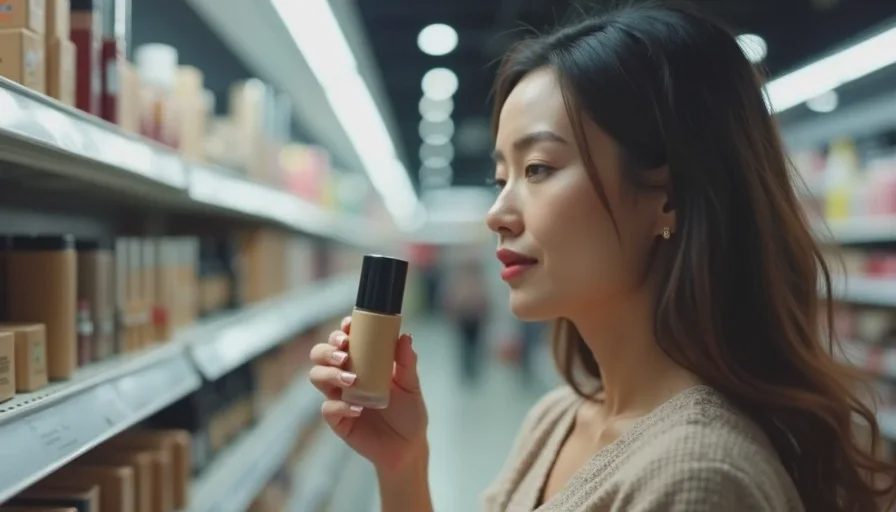
The clock starts the moment you walk through the automatic doors. You have ten minutes inside a CVS, Walgreens, or Target. You cannot swatch. You cannot compare bottles under natural light. You cannot ask a sales associate for help—there isn’t one. You have to walk out with products that will make you look presentable, and you have to get it right on the first try.
This is not a “best drugstore products” list. This is a protocol for buying and applying makeup under the most restrictive condition possible: no shade testing.
Why Blind Buying Feels Impossible (And Why It Isn’t)
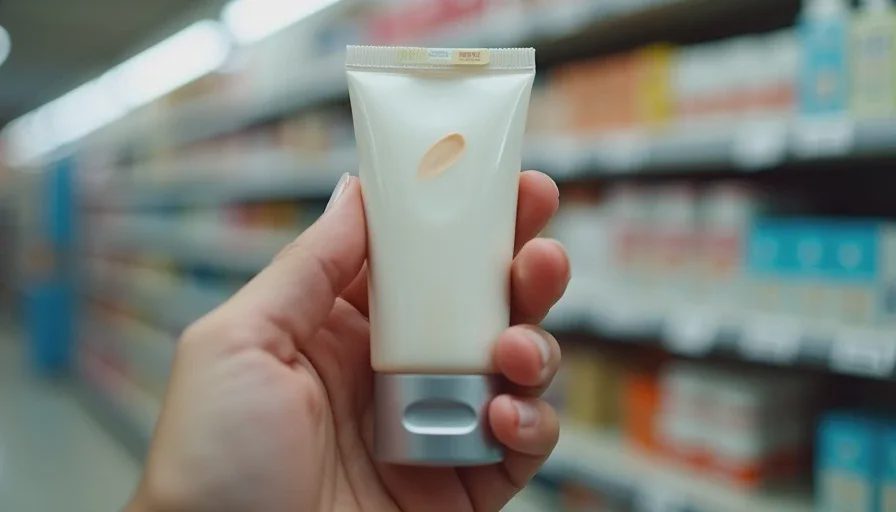
The drugstore shade-matching problem is well documented. You cannot sample the product, the color swatches on the shelf are often inaccurate, and the overhead fluorescent lighting distorts every undertone in the aisle. A foundation that looks like a perfect match under drugstore lights can turn orange in daylight or gray in an office conference room.
The conventional advice—“always test before you buy”—is correct in theory and useless in practice. You do not have time. You do not have a tester. You do not have a mirror that shows you what you actually look like.
What you have is structure. A repeatable system for making a blind purchase that is forgiving of error. The goal is not a perfect match. The goal is a match that is close enough that nobody notices, including you.
The Blind-Buy Foundation: Rules That Actually Work
Rule 1: Hold the bottle to your neck, not your hand.
The instinct is to hold the bottle against your hand or wrist. This is wrong. Hand skin is often a different tone than facial skin, and the lighting in the aisle will make both look different than they do in your bathroom mirror.
Do this instead: Hold the bottle directly under your jawline, at the top of your neck. The neck is the closest visible skin to the face, and a foundation that matches the neck will blend seamlessly at the jaw. If the bottle is sealed and you cannot see the color, look for a shade guide sticker on the shelf or the cap. Most drugstore brands include a small printed swatch on the packaging.
Rule 2: Buy one half-step warmer, never cooler.
Cool-toned foundation under artificial office lighting reads as gray or ashy. Warm-toned foundation reads as healthy. This is not a matter of preference. It is a matter of physics: warm pigments reflect more light in the yellow-orange spectrum, which mimics the natural color of well-hydrated skin. Cool pigments reflect blue-green light, which reads as “unwell” under the same lighting conditions.
If you are genuinely uncertain between two shades, choose the warmer one. A slightly warm foundation can be corrected with a lighter hand or blended down the neck. A slightly cool foundation cannot be corrected without adding warmth back in, which you do not have time to do.
Rule 3: Matte for oily, hydrating for dry—but always forgiving.
The finish of the foundation matters more than the shade for blind buys. A matte foundation in the wrong shade is a visible mask. A sheer tint in the wrong shade is barely noticeable.
If you have oily skin: Look for a matte or semi-matte formula with oil-absorbing ingredients like silica microspheres or oil-absorbing polymers. The best drugstore foundations for oily skin use these ingredients—not just talc—to control shine throughout the day. Heavy setting powder does not solve oily skin long-term, because talc has a saturation ceiling. Once it hits that ceiling, oil does not stop; it just sits underneath a layer of product that is no longer absorbing anything.
If you have dry skin: Look for a hydrating, serum-based tint. A matte foundation on dry skin will crack within two hours, regardless of shade accuracy.
If you have combination or normal skin: A water-infused tint or BB cream is the most forgiving blind buy. It evens tone without creating a film that can crack or oxidize.
Rule 4: If the brand offers a shade-finder quiz, use it before you leave home.
Several drugstore brands, including NYX and Maybelline, offer online shade-finder tools that match your existing foundation to their range. If you know the exact shade name of a foundation you already wear, type it into the tool. This takes 60 seconds at home and eliminates 80% of the guesswork in the aisle. The NYX shade finder quiz and virtual try-on tool let you test-drive options from your phone.
The 10-Minute In-Store Purchase Order

You are in the aisle. You have ten minutes. Here is the exact sequence.
Minute 1–3: Foundation (the only purchase that matters)
Priority: a tinted product, not a full-coverage foundation.
A full-coverage foundation in a blind-buy scenario is a gamble. A tinted moisturizer, BB cream, or skin tint is a calculated risk. The tint is sheer enough that a slightly off shade is invisible. The foundation is opaque enough that a slightly off shade is a visible line at the jaw.
Recommended blind-buy options:
Maybelline Dream Fresh BB Cream ($8–$10). A lightweight coverage that lets the skin show through, available in a range of shades that are forgiving of small mismatches. It is one of the most consistently recommended drugstore products for a natural, no-makeup makeup look.
L’Oréal True Match Nude Hyaluronic Tinted Serum ($12–$15). A tinted serum that is shockingly full-coverage for a serum texture, accessible, and ideal for sensitive skin. The hyaluronic acid base means it hydrates while it evens tone, which is critical in dry indoor environments.
Maybelline Super Stay Up to 24HR Skin Tint ($10–$14). A lightweight tint with film-forming agents that hold up against humidity better than traditional matte foundations. The shade range is forgiving enough that a close-but-not-perfect match will still look natural.
What not to buy: Any “24-hour matte” foundation. Matte formulas in the wrong shade are visible from across a room. Matte formulas in the right shade can still crack in dry air or turn patchy in humidity.
Minute 4–5: Concealer (optional, but high-value)
Priority: an under-eye brightener, not a full-coverage spot concealer.
Under-eye darkness is the single strongest visual signal of fatigue. A concealer that is one half-step lighter than your skin tone can neutralize this without requiring a precise match.
Recommended blind-buy option: Maybelline Instant Age Rewind Eraser Concealer ($8–$11). It is a favorite that actually erases dark circles, with a sponge applicator that is not ideal for hygiene but works when you have no brush. Choose a shade one half-step lighter than your foundation. The sponge applicator delivers a small, controlled amount of product that you can tap in with your ring finger.
If you skip concealer: Use the foundation or tint itself, applied in a slightly heavier layer under the eyes and tapped in with a finger. This is less precise but requires no additional purchase.
Minute 6–7: Eye definition (pick one, not two)
You cannot buy both a mascara and a brow pencil and still have time to apply both. Choose the one that does more structural work for your face.
If your brows are sparse or light: Buy a brow pencil.
A brow pencil defines the structure of the face more than any other single product. The NYX Micro Brow Pencil ($8–$10) delivers precise hair-like strokes without a harsh effect. Choose a shade one step cooler than your hair color—warm brown brow pencils read as reddish under office lighting.
If your brows are full: Buy a mascara.
A waterproof or tubing mascara adds visible length and darkness to the lashes, which makes the eyes appear larger and the face appear more alert. Maybelline Sky High Waterproof Mascara ($11–$13) holds a curl without smudging or flaking in humidity. One coat is enough. A second coat in dry air risks clumping.
Minute 8–9: Color (one product, two jobs)
Priority: a cream blush that doubles as a lip color.
Cream products blend with body heat and forgive imprecise application. Powders require brushes and precision. In a ten-minute challenge, forgiveness is a feature, not a compromise.
Recommended blind-buy option: e.l.f. Putty Blush ($7) in a warm nude or muted rose. Tap a small amount onto the apples of your cheeks with your ring finger and blend upward. Then tap whatever remains on your finger onto your lips. The warmth of your skin is the tool.
What not to buy: A powder blush. It requires a brush you do not have, and it will sit on top of the skin rather than melding with it.
Minute 10: Lip balm or tinted lip product
Priority: hydration plus a hint of color.
In dry indoor air, lips crack faster than any other part of the face. A tinted lip balm with SPF gives you color and protection in one product. Burt’s Bees Tinted Lip Balm, ChapStick Total Hydration, or e.l.f. Hydrating Core Lip Shine all work.
What not to buy: A glossy lip product. Gloss migrates in heat and disappears within an hour. If you need color to last, choose a matte or satin finish.
The Total Kit
Product | Approximate Price | Function |
|---|---|---|
Tinted moisturizer, BB cream, or skin tint | $8–$15 | Base + SPF + tone correction |
Concealer (optional) | $8–$11 | Under-eye brightening |
Brow pencil OR waterproof mascara | $8–$13 | Eye definition |
Cream blush | $7 | Cheeks + lips |
Tinted lip balm | $4–$7 | Lip color + protection |
Total: $35–$53. If you skip the concealer and choose either the brow pencil or the mascara (not both), you can build a presentable face for under $30.
The 5-Minute Application (Fingers Only, No Brushes)
You are in a bathroom. You have no brushes, no sponge, and no time. Your fingers are the tool.
Wash your face with warm water. Pat dry. Do not scrub.
Apply lotion if you have it. A thin layer of hotel lotion or a travel-size moisturizer creates a hydrated surface that prevents the tint from cracking in dry air. Let it absorb for 60 seconds.
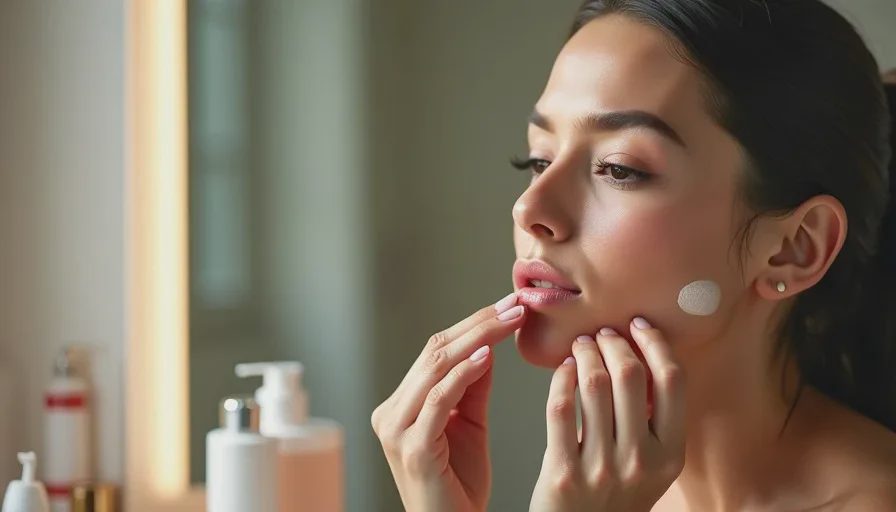
Apply the tint. Squeeze a small amount onto the back of your hand. Press it into your skin with two fingers, building only where you want more coverage. Work in outward strokes. Do not swipe—press and pat. Creams soften and grab when your hands are warm, so press and pat rather than wipe, and let each layer set for a few seconds before the next.
Apply concealer under the eyes. Tap, do not swipe. Use your ring finger—it applies the least pressure and is the easiest to control.
Apply brow pencil or mascara. Short strokes for brows. One coat for mascara, wiggling the wand at the base and pulling up.
Apply cream blush to cheeks, then lips. Tap onto the apples of your cheeks and blend upward. Then tap whatever remains on your finger onto your lips.
Apply lip balm.
Total time: 5–6 minutes. The result is not a full face. It is a face that reads as awake, intentional, and not visibly distressed by the fact that you had to buy everything from a drugstore in under ten minutes.
FAQ: The Ten-Minute Drugstore Challenge
What if I cannot find my shade in any tint or BB cream?
Buy the closest shade and mix it on the back of your hand with a tiny amount of lotion. This sheers out the pigment and makes a mismatched shade less visible. If the tint is too dark, add more lotion. If it is too light, add a drop of a darker product if you have one. If you have nothing to mix with, apply the tint in a very thin layer and build only where you need coverage. A sheer layer of a slightly wrong shade is invisible. A thick layer is not.
What if I have deep or very deep skin tone?
Shade testing on deep and very deep skin tones is incomplete for some drugstore picks. This is a real limitation, not a personal failure. Look for brands with expanded shade ranges: Maybelline Fit Me, L’Oréal True Match, and NYX Can’t Stop Won’t Stop all offer shades in deeper ranges. If you cannot find a match in a tint, skip the base entirely. Use a brow pencil and a cream color for cheeks and lips. A bare face with defined brows and coordinated color looks intentional. A bare face with a poorly matched foundation looks like a mistake.
What if I have sensitive or reactive skin?
Do not introduce a new base product to reactive skin under time pressure. Buy a brow pencil and a tinted lip balm only. Skip the tint and concealer. If you must use a base, patch-test on your jawline first and wait 20 minutes—but you do not have 20 minutes. The safest blind buy for sensitive skin is Almay or Physicians Formula, both of which are formulated for sensitive skin and eyes. But the safest choice of all is to skip the base entirely.
What if I have oily skin and the tint slides off by lunch?
Apply the tint and then blot immediately with a tissue before it sets. This removes excess oil-attracting ingredients without removing pigment. If your skin is extremely oily, skip the tint on the T-zone entirely and use only a small amount of concealer in that area. A bare T-zone with a tinted perimeter looks intentional. A shiny, sliding T-zone does not.
Can I use a setting spray instead of powder?
If you have oily skin and you are in a humid climate, yes. A mattifying setting spray like NYX Matte Finish ($9.99) or Milani Make It Last ($9) locks makeup in place and controls shine without adding the powder layer that can turn cakey in humidity. Spray after the tint and blush, not before. Hold the bottle 8–10 inches from your face and mist in a Z-pattern.
If you have dry skin, skip the setting spray. Hydrating sprays add moisture to the skin surface, which is the opposite of what dry skin needs in dry air.
What if I only have $20?
Brow pencil ($8) + cream blush ($7) + tinted lip balm ($5) = $20. Defined brows, a coordinated cheek-lip color, and protected lips. A bare face with strong brows and coordinated color looks minimalist and intentional. A bare face with no brows and no color looks unfinished.
How do I make the tint last all day without a setting spray?
The tint will fade fastest on the T-zone. If you are in a humid climate, blot the T-zone with a tissue before applying the tint, then apply the tint thinly. If you are in a dry climate, apply lotion first and let it absorb fully before applying the tint. Carry blotting papers—not powder—for midday touch-ups. Adding powder over a six-hour-old base is what creates patchiness, not the oil itself.
What if the meeting is outdoors?
Add a mini SPF ($5–$8). Neutrogena Ultra Sheer travel-size sunscreen is oil-free and mattifying. Apply it under the tint, not over it. If you apply SPF over the tint, you will move the base and create streaks.


No notes yet — write the first one.