The bag is small. The trip is short. The stakes are specific.
You are flying out Monday morning and flying back Tuesday night. One carry-on. One laptop bag. One client dinner. One early breakfast meeting where you will be the only person who looks like they slept on a plane.
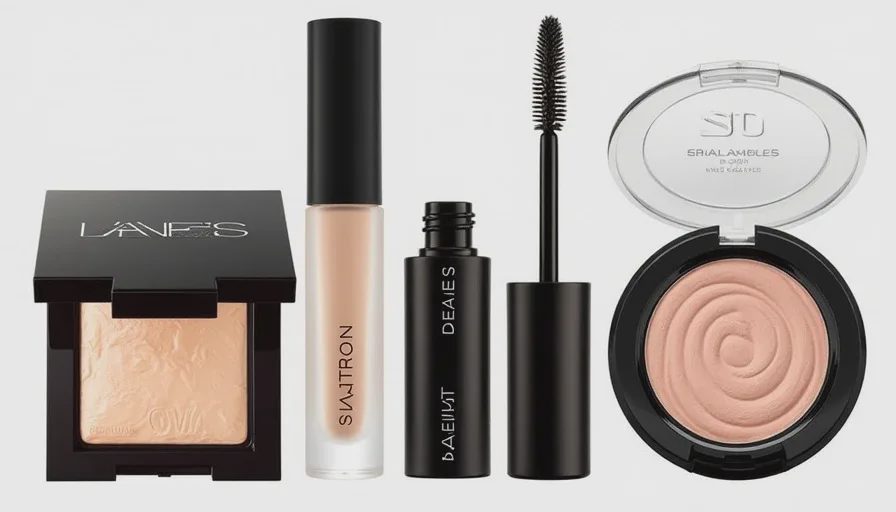
You have room for three makeup products. Not three categories with six backups. Not a “capsule” that secretly contains eleven items. Three physical objects that must fit in a quart-sized bag and survive being tossed into an overhead bin.
The question is not “what are the best three products.” The question is: which three functions are non-negotiable when you cannot bring anything else?
The Wrong Way to Answer This Question
Most “three-product travel kit” articles give you a list: tinted moisturizer, cream blush, mascara. That list is not wrong, but it is not reasoned. It works for a vacation in Lisbon. It does not work for a two-day work trip where you have a 7 AM flight, a 2 PM presentation, and a dinner where you need to look like a person who has opinions about things.
The three-product constraint forces a different kind of decision-making. You are not choosing products. You are choosing functions. And functions must be ranked by what they do when everything else is missing.
Here is the hierarchy.
Category 1: The Base That Unifies

What it does: Evens skin tone, reduces visible redness, and creates a surface that reads as “intentional” rather than “unfinished.”
Why it is first: In a work context, skin tone is the single strongest visual signal of wellness, energy, and competence. A face with uneven redness around the nose and chin reads as “tired” or “stressed,” regardless of how well you slept. A face with even, slightly warm skin reads as “present.” This is not vanity. It is the same reason people iron shirts.
What it must do: A base in a three-product kit cannot be a full-coverage foundation. It must be blendable with fingers in under ninety seconds, forgiving of a slightly imperfect shade match, and resistant to the specific climate you are flying into.
What to look for:
A tinted skin tint or BB cream rather than a foundation. Booie’s travel kit philosophy is built on exactly this logic: a BB cream that works as “a moisturiser, a base and buildable coverage” collapses three steps into one tube. For a two-day trip, that collapse is the difference between making your flight and missing it.
A cream-to-powder or serum-based formula. Liquid foundations in pump bottles are fragile, leak-prone, and often too heavy for hotel bathroom lighting. A skin tint in a tube or stick format survives luggage handling and can be applied with the warmth of your fingers.
SPF if possible. A tinted SPF 30+ that doubles as a primer and a light base is the ideal three-product base. You get sun protection, tone correction, and a surface for the rest of your routine in one purchase.
What not to buy: Any “24-hour matte” foundation. Matte formulas behave unpredictably in humidity and dry cabin air. They also require more precision to apply than a tint, and precision is the first thing you lose when you are standing in a hotel bathroom at 6:45 AM.
Category 2: The Color Product That Restores
What it does: Returns warmth, dimension, and “aliveness” to a face that a base alone can make look flat.
Why it is second: A base without color makes a face look correct but not human. Color—on cheeks, lips, and optionally eyelids—is what signals health. This is why every three-product routine that actually works includes a multi-use color product, not a dedicated blush plus a dedicated lipstick.
What it must do: One product must serve at least two of three functions: cheeks, lips, and eyes. A cream blush that works as a lip tint is the most common solution. A multi-use stick that works on cheeks, lips, and eyelids is even better.
The logic is structural: you are not packing a blush and a lipstick. You are packing a color. The color is what matters. The delivery format is secondary. e.l.f.’s Monochromatic Multi Stick and NARS’ The Multiple both operate on this principle—one bullet, multiple surfaces, blendable with fingers.
What to look for:
A warm, muted shade rather than a bright one. Berry, rose, and warm nude tones work on cheeks and lips without looking theatrical. A bright coral or fuchsia will look appropriate on a dinner date but distracting in a 9 AM meeting.
A cream or balm formula. Powders require brushes and precise placement. Creams melt into the skin with body heat and forgive imprecise application. In a three-product kit, forgiveness is a feature, not a compromise.
A shade that can build. Light application for the morning presentation. Heavier application for the client dinner. One product, two intensities, no second purchase.
What not to buy: A powder blush. It requires a brush, it cracks in dry cabin air, and it cannot double as a lip product. The entire point of the second category is multi-function. Powder violates that rule.
Category 3: The Eye Definition That Anchors
What it does: Defines the eyes so the face reads as “awake and focused” rather than “present but exhausted.”
Why it is third but non-negotiable: You can skip brows. You can skip eyeshadow. You cannot skip the product that makes your eyes visible from across a conference table. In a two-day work trip, the eye area is where fatigue shows first—puffiness, redness, and a lack of definition. A mascara or a brow product addresses this in under sixty seconds.
What it must do: It must be smudge-resistant, quick to apply, and ideally waterproof. A non-waterproof mascara in a humid climate or a dry airplane cabin will flake or transfer. Flakes on the cheekbone are visible from across a table. Smudges under the eye read as “hungover,” not “traveling.”
The choice between mascara and brow product:
Both work. The decision depends on your face and your priorities.
Mascara adds visible length and darkness to the lashes, which makes the eyes appear larger and the face appear more alert. A tubing mascara—one that forms a polymer tube around each lash rather than painting pigment onto it—resists smudging through humidity and long travel days better than traditional formulas.
Brow product frames the face and restores structure. Celebrity makeup artist Laura Geller’s “3 E’s” rule—eyeliner, eyelash (mascara), eyebrow—is built on the premise that these three elements make the eyes “always stand out”. In a three-product kit, a brow pencil or gel can do more structural work than a mascara if your brows are sparse or light.
The practical answer for most people: Mascara. It is faster to apply than a brow product, harder to overdo, and more universally visible. A single coat of a tubing or waterproof mascara takes fifteen seconds. A brow pencil that looks natural takes thirty seconds and more skill.
What not to buy: A non-waterproof mascara. A liquid eyeliner that requires a steady hand. Any eye product that requires a mirror with magnification to apply correctly. You will be applying this in a hotel bathroom with lighting designed by someone who has never done makeup.
The Three Categories in Practice: Two Scenarios
Scenario A: The Orlando Client Meeting (Hot, Humid)
Base: A lightweight skin tint. Something with film-formers that resist sweat emulsification.
Color: A cream blush in a warm nude or muted rose. Applied to cheeks and lips. Keep it minimal on the cheeks—humidity amplifies color.
Eye: A tubing mascara. Waterproof is the floor, not the ceiling. Tubing formulas physically wrap the lash rather than painting it, which means they do not dissolve in sweat.
Total kit weight: Under 100 grams. Fits in a jacket pocket.
Scenario B: The Denver Winter Pitch (Cold, Dry)
Base: A serum-based tint or a moisturizing BB cream. Dry cabin air and dry outdoor air will pull moisture from any matte formula. A hydrating base prevents the “cracked by lunch” problem.
Color: A cream blush with a slightly more emollient texture. Cream products in dry climates stay blendable longer than powder.
Eye: A waterproof mascara. Dry air does not cause smudging, but it does cause flaking if the formula is brittle. A tubing mascara avoids both problems.
Total kit weight: Under 100 grams. Same pocket.
What You Are Actually Choosing Between

The three-product constraint is not about deprivation. It is about priority ranking under pressure. You are choosing between:
A base that unifies your skin tone versus a color product that makes you look alive versus an eye product that makes you look awake.
A product that works in humidity versus a product that works in dry cold versus a product that works in both.
A formula that forgives imprecise application versus a formula that requires precision you will not have at 6 AM.
The answer for most two-day work trips is: base, color, eyes. In that order. Because if you have to walk into a meeting with only one of the three, the base matters most. If you have two, add color. If you have three, add the eyes. The hierarchy is not arbitrary. It is the hierarchy of what makes a face read as “professional” under the specific pressure of a work trip where you cannot go back to the hotel to fix anything.
FAQ: Three-Product Business Trip Kits
What if my skin is oily and I need powder to control shine?
You do not have room for a dedicated powder in a three-product kit. Instead, choose a base with a natural or semi-matte finish rather than a dewy one, and use blotting papers—which are not makeup and do not count against your three—to manage shine throughout the day. A cream color product will also stay put longer on oily skin than a powder blush, because it does not sit on the surface of the skin.
What if I have sensitive or reactive skin and cannot risk a new base product?
Take the base you already trust. The three-product kit is not the time to experiment. If your sensitive skin tolerates a specific tinted moisturizer at home, that is the one you pack. The color and eye products are lower-risk because they cover less surface area. If you are genuinely unsure, skip the base entirely and rely on brow product and mascara for structure, plus a lip-and-cheek color. A bare face with defined features looks intentional. A reactive face with a new foundation looks like a mistake.
Can I use the same product for base and color?
In theory, a heavily pigmented skin tint could double as a cheek color. In practice, this rarely works. Base products are formulated to even tone, not to add warmth or depth. Using a base product as a blush either does nothing visible or creates an unnatural flatness. The multi-use logic belongs to the second category—the color product—not the first.
What about brows? I feel unfinished without them.
If brows are your non-negotiable, swap the eye category from mascara to brow product. The three-product framework does not mandate mascara specifically. It mandates eye definition. If a brow pencil or gel defines your face more effectively than a mascara, use the brow product. The point is to fill the third slot with the product that does the most structural work for your specific face.
How do I apply a cream color product without a brush?
Fingertips. Warm the product on the back of your hand first, then tap—do not swipe—onto the cheeks. For lips, apply directly from the bullet or tap the warmed product onto the lips with your ring finger. The warmth of your skin is the tool. This is not a compromise; it is how these products are designed to be used.
What if the trip is three days instead of two?
The three-product constraint holds. A third day does not change the functions you need. It changes how much product you need to bring. If your base is in a small tube and your color product is a stick, a three-day trip requires the same three items. The only difference is that you may need to reapply the color product more frequently if you are going from a meeting to a dinner without returning to the hotel.


No notes yet — write the first one.