
There is a specific kind of silence that follows the moment you realize your makeup bag is gone. Not delayed. Not misplaced. Gone. The airline has no record of it. The hotel lost and found has nothing. The rental car was returned three cities ago.
You are not in a specific city with a specific climate and a specific drugstore. You are in the universal scenario: everything you rely on to look like yourself is unavailable, and you have to rebuild from zero.
This is not a packing list. This is a reliability framework—the routine you can reconstruct anywhere, in any climate, with whatever is available, and still walk into a room looking like a person who has their life together.
Why “Reliable” Is Not the Same as “Best”
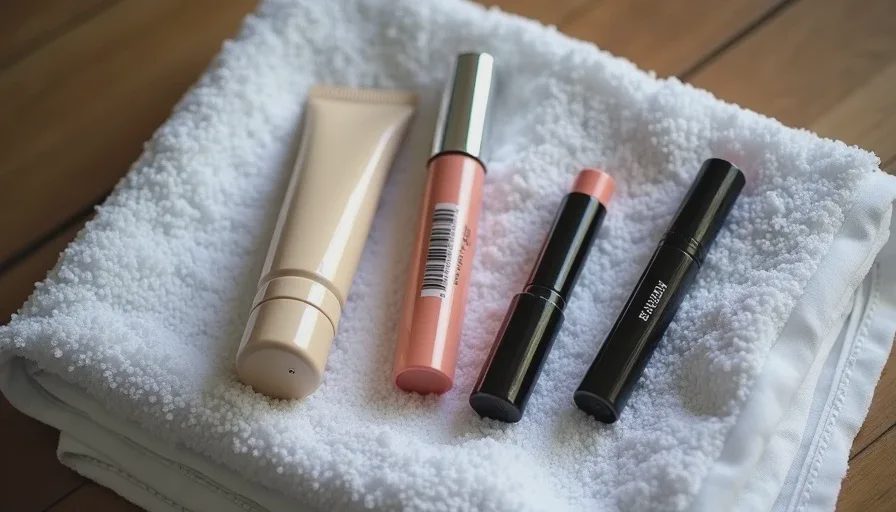
The internet is full of “best makeup products” lists. Those lists assume you have time, access, and the ability to test before you buy. The “everything went missing” scenario eliminates all three.
What remains is reliability: the quality of a routine that works even when the products are imperfect, the shade match is approximate, the lighting is bad, and the application tools are your fingers.
A reliable routine has four properties:
It collapses functions. One product does at least two jobs. A cream blush that works on lips and cheeks. A tinted moisturizer that works as base and SPF. A brow pencil that works as brow and eyeliner in a pinch.
It forgives imprecision. Cream and stick formulas blend with body heat. Powders require brushes and precision. In an emergency, forgiveness matters more than finish.
It adapts to climate without changing products. The same three-product kit works in Miami humidity and Denver dry cold if you adjust application method, not product choice.
It has a defined failure mode. You know in advance what will go wrong if the climate is wrong, the skin is reactive, or the wear time is too long. Reliability means knowing the limits, not pretending they do not exist.
The Five-Slot Framework
Every reliable “everything went missing” routine fills five slots. The products that fill them can change. The slots cannot.
Slot 1: The Base That Unifies
Function: Even skin tone. Reduce visible redness. Create a surface that reads as “intentional.”
What it must do: Blend with fingers in under 90 seconds. Forgive a slightly imperfect shade match. Resist the specific climate you are in.
Reliable product types:
Tinted moisturizer with SPF (works in most climates, adds sun protection)
BB cream or skin tint (lighter than foundation, more forgiving)
Serum-based tint (best for dry climates)
Water-infused tint (best for humid climates)
The reliability rule: Never buy a full-coverage foundation in an emergency. You cannot judge a shade match under drugstore lighting. A tint that is slightly off is invisible. A foundation that is slightly off is a visible mask.
The failure mode to know: In dry indoor air (hotel heating, airplane cabins, over-air-conditioned offices), any base will crack if applied over dry skin. The fix is not a different product. The fix is a layer of lotion underneath.
Slot 2: The Color That Restores
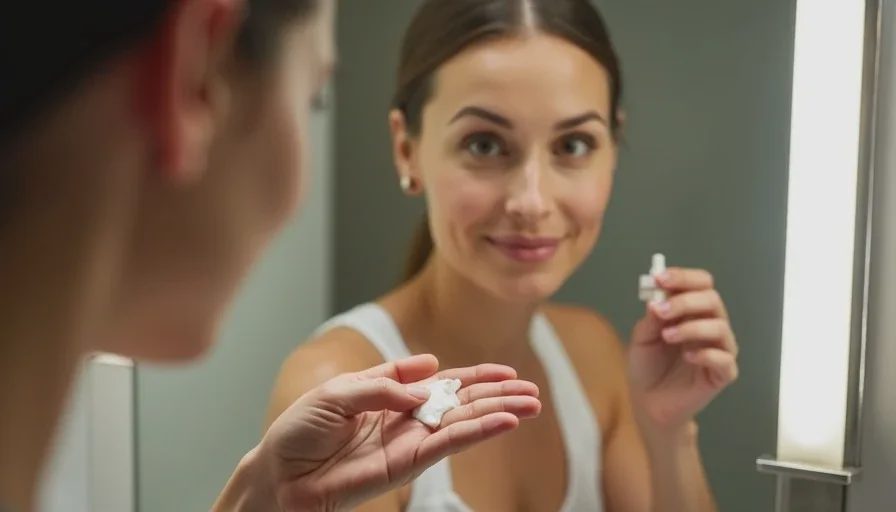
Function: Return warmth and dimension to a face that a base alone makes flat.
What it must do: Serve at least two of three functions: cheeks, lips, and eyes. Blend with fingers. Build from light to heavy without a separate product.
Reliable product types:
Cream blush stick (cheeks, lips, eyelids)
Multi-use color stick (same)
Tinted lip balm with a buildable texture (lips and cheeks in a pinch)
The reliability rule: Warm, muted shades are more reliable than bright ones. Berry, rose, and warm nude read as “healthy” in office lighting. Coral and fuchsia read as “evening” and look out of place in a 9 AM meeting.
The failure mode to know: In high humidity, cream products can migrate. Apply less than you think you need, blend upward, and blot with a tissue if the climate is wet.
Slot 3: The Eye Definition That Anchors
Function: Define the eyes so the face reads as “awake and focused” rather than “present but exhausted.”
What it must do: Apply in under 60 seconds. Resist smudging and flaking. Work without a magnifying mirror.
Reliable product types:
Tubing mascara (wraps lashes in a polymer tube; resists humidity and flaking)
Waterproof mascara (resists sweat and tears; harder to remove but reliable)
Brow pencil with a spoolie (defines structure; faster than mascara for some faces)
Brow gel with tint (fills and sets in one step)
The reliability rule: Choose one eye product, not two. In an emergency, you do not have time for both brows and lashes. Pick the one that does more structural work for your face. If your brows are sparse, pick the brow product. If your brows are full, pick the mascara.
The failure mode to know: Non-waterproof mascara in humidity will flake onto the cheekbone. Flakes are visible from across a conference table. Waterproof or tubing is non-negotiable in any climate where you might sweat.
Slot 4: The Lip That Protects
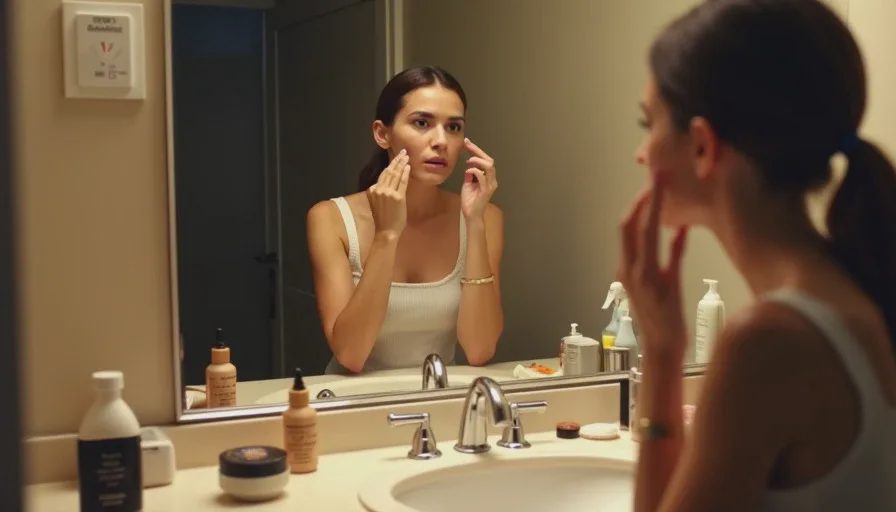
Function: Prevent cracking, add color, and complete the face.
What it must do: Hydrate. Add a tint that coordinates with the cheek color. Contain SPF if you will be outdoors.
Reliable product types:
Tinted lip balm with SPF
Cream lipstick that can double as blush
Lip oil with a slight tint (less reliable in wind; better in mild climates)
The reliability rule: In dry climates, lip balm is not optional. Lips crack faster than any other part of the face. In humid climates, a matte lip product grips better than a glossy one. Adjust the finish, not the function.
The failure mode to know: Glossy lip products migrate in heat and disappear within an hour. If you are in a humid climate and need color to last, choose a matte or satin finish.
Slot 5: The Fix That Rescues
Function: Address the specific failure that will happen. Not “if.” “When.”
What it must do: Be small, cheap, and targeted. This is not a full product. It is a patch.
Reliable product types:
Concealer (for under-eye darkness, blemishes, or redness the tint missed)
Blotting papers (for oil control without powder)
Cotton swabs (for smudge removal; not makeup, but counts as a tool)
Mini micellar water (for fixing mascara mistakes without redoing the whole eye)
The reliability rule: The fix is climate-specific. In humidity, the fix is blotting papers. In dry cold, the fix is a tiny tube of lotion or balm to pat over cracked patches. In a business setting, the fix is concealer for under-eye darkness.
The failure mode to know: If you skip the fix slot, you are relying on the first four products to be perfect. They will not be. The fix is what makes the routine reliable.
The Climate Adaptation Matrix
The five slots stay the same. The application method changes.
Climate | Base Adjustment | Color Adjustment | Eye Adjustment | Fix Adjustment |
|---|---|---|---|---|
Hot + humid (Florida, Gulf Coast, tropical) | Apply thin layer; blot immediately | Use less than you think; cream only | Tubing or waterproof mascara | Blotting papers |
Hot + dry (Arizona, desert Southwest) | Apply over lotion; avoid matte formulas | Cream blush; avoid powder | Waterproof mascara | Mini lotion for midday patching |
Cold + dry (Chicago winter, Denver, high altitude) | Apply over heavy lotion; mix lotion into tint | Cream blush; add extra to lips | Waterproof mascara; avoid flaking formulas | Lip balm; lotion for cracked patches |
Cold + damp (Pacific Northwest, winter UK) | Apply thin layer; let set | Cream blush; build slowly | Tubing mascara | Blotting papers; cotton swabs |
Indoor heating / air conditioning | Lotion primer is mandatory | Cream only; powder will crack | Any reliable eye product | Lotion; lip balm |
The Reliable Routine, Step by Step
You are in a hotel bathroom, a friend’s apartment, or an airport restroom. You have five products or fewer. You have ten minutes.
Wash your face with warm water. Pat dry. Do not scrub.
Apply lotion. If you have hotel lotion, use it. If you have no lotion, splash water on your face and pat dry—but know that the base will crack faster without it.
Apply base. Three dots: one on each cheek, one on the forehead. Blend with fingers in outward strokes. If the climate is dry, mix a tiny amount of lotion into the base on the back of your hand first.
Apply color. Tap onto the apples of your cheeks. Blend upward. Tap whatever remains onto your lips.
Apply eye product. One coat of mascara, or short strokes of brow pencil. Not both if you are short on time.
Apply lip balm or lip color.
Apply fix. Concealer under the eyes if needed. Blotting papers if the T-zone is shiny. Cotton swab if mascara smudged.
Total time: 8–10 minutes. The result is not a full face. It is a face that reads as competent, awake, and not visibly distressed by the loss of everything you own.
FAQ: The “Everything Went Missing” Scenario
What if I have no access to a drugstore at all?
Use what the hotel provides. Lotion as a base primer. Conditioner as a brow tamer. Lip balm on lips and cheeks. If you have a tinted sunscreen, use it as your base. If you have nothing tinted, focus on structure: brows and lips. A bare face with defined brows and a coordinated lip looks intentional. A bare face with no definition looks unfinished.
What if I have sensitive or reactive skin?
Skip the base entirely. Use brow pencil and tinted lip balm only. A bare face with strong brows and a coordinated lip-cheek color looks minimalist. Introducing a new base product to reactive skin under travel stress is a gamble you do not need to take. If you must use a base, patch-test on your jawline first and wait 20 minutes.
What if I have oily skin and the base slides off?
Apply the base and blot immediately with a tissue. This removes excess oil-attracting ingredients without removing pigment. If your skin is extremely oily, skip the base on the T-zone entirely and use only concealer in that area. A bare T-zone with a tinted perimeter looks intentional. A shiny, sliding T-zone does not.
What if I only have $10?
Brow pencil ($3) + tinted lip balm ($5) + travel-size lotion ($2) = $10. Defined brows and protected, tinted lips change the perceived structure of your face more than a base product. Lotion as a primer makes whatever you apply on top last longer.
Can I use hotel shampoo or conditioner as a makeup remover?
Conditioner, yes. Shampoo, no. Conditioner breaks down pigment without stripping the skin. Shampoo is formulated to strip oils from hair and will leave your face tight and irritated.
How do I make the routine last all day?
The base is the first thing to fail. If you are in a humid climate, blot before you apply anything else, then apply the base thinly. If you are in a dry climate, apply lotion first and let it absorb fully before applying the base. The color and eye products will outlast the base in almost every climate. Carry blotting papers, not powder.
What if I have a meeting and then a dinner?
The five-slot framework handles this. In the morning, apply the base and eye product lightly. At dinner, add more color to cheeks and lips. If the base has faded, tap a small amount of concealer over the areas that need it most—under the eyes and around the nose. You do not need to redo the full routine. You need to add intensity where the lighting is dimmer and the stakes are social rather than professional.
What if I wear glasses?
Glasses change the eye equation. Frames draw attention to the eyes, so brow definition matters more than mascara. Choose the brow pencil over the mascara. If you wear both, keep the mascara light—heavy lashes can smudge against the lenses. The base and color slots remain the same.
No notes yet — write the first one.