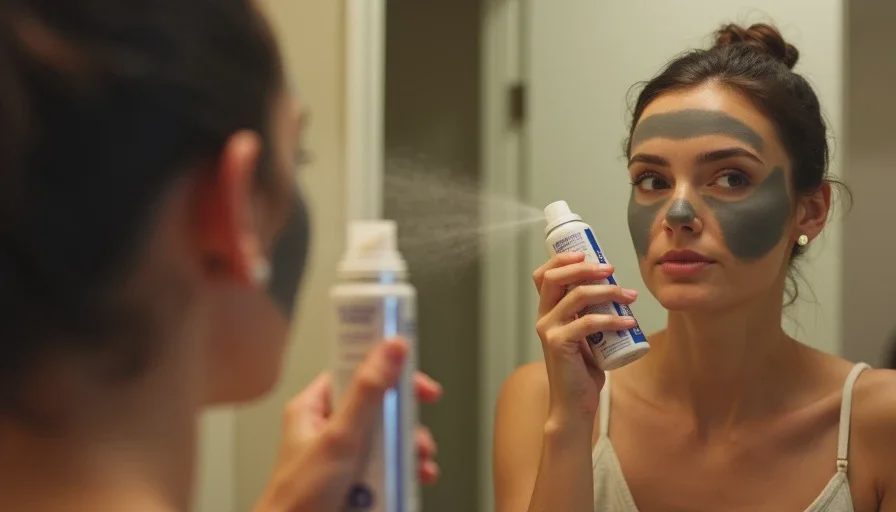
Every traveler has one. The product you packed without hesitation. The one you had used at home, in your own climate, and trusted completely. The one you did not think twice about because it had never let you down. And then you landed somewhere with different air, different water, different lighting, and by noon you were standing in a bathroom mirror wondering what went wrong.
This is the thread where you post that product. Not as a review. Not as a warning. As a failure profile—a structured, searchable record of what you packed, where you packed it for, and exactly when and how it failed.
This post is the model. Below is a complete failure profile submitted by a member, followed by the template you can copy and fill in for your own.
Why Failure Profiles Matter More Than Reviews

A review says: "This product did not work for me."
A failure profile says: "This product failed at 11:40 AM, in 74% humidity, on combination-oily skin, 3.5 hours after application, with visible separation around the nostrils and oxidation from neutral beige to orange, after being applied over a hydrating serum and a mattifying primer, and here is what I would change next time."
The first statement is an opinion. The second is data.
Reviews are written for the moment. Failure profiles are written for the next traveler who searches "setting spray failed in humidity" at 11 PM in a hotel room with a bag that did not arrive. The review tells them nothing actionable. The failure profile tells them exactly what conditions to avoid.
This is the difference between a beauty community and a reference database. The database is the point.
The Model Failure Profile
Submitted by: Anonymous member (sensitive skin, combination-oily, frequent business traveler)
Board: Failure Files
Product: A mattifying setting spray, charcoal formula, 3.4 oz, purchased at a drugstore
Note on naming: The member withheld the brand name to comply with the forum's no-brand-pile-on rule. The formula characteristics are documented below so the failure can be compared against other products in the same category. Formula: alcohol denat. listed second in the ingredient list, followed by butylene glycol, glycerin, and charcoal powder.
Climate and Location
Destination: New Orleans, Louisiana
Season: Late June
Outdoor conditions at application (8:10 AM):
Temperature: 29°C (84°F)
Dew point: 24°C (76°F)
Relative humidity: 84%
Heat index: 34°C (93°F)
Outdoor conditions at failure (11:40 AM):
Temperature: 32°C (90°F)
Dew point: 25°C (77°F)
Relative humidity: 79%
Heat index: 38°C (100°F)
Indoor conditions (10:00 AM–12:00 PM):
Conference room air conditioning set to 20°C (68°F)
Indoor relative humidity: 34%
Time spent outdoors before entering: 1 hour 50 minutes
Time spent in air-conditioned transit: 20 minutes
Skin Type and Constraints
Skin type: Combination-oily, sensitive, reactive to fragrance
Known constraints: Oily T-zone, normal-to-dry cheeks, prone to redness around the nose, reacts to high concentrations of denatured alcohol with rebound oil production
Time available: 12 minutes for full face
Budget: Under $15 for the setting spray
Products already available: Full travel kit, including hydrating serum, ceramide moisturizer, mattifying primer, long-wear foundation, translucent powder, cream blush, brow pencil, tubing mascara, tinted lip balm
Retailers available: Airport Walgreens, hotel-adjacent CVS
Required wear time: 10 hours (8:00 AM to 6:00 PM)
The Product Decision
Why it was packed with confidence: The member had used this setting spray at home in a temperate climate (22°C, 45% humidity) for eight months with no issues. It controlled shine, did not break down the base, and did not irritate the skin. The label claimed "up to 16-hour wear" and "mattifying." The member packed it specifically for a humid destination because mattifying setting spray is the standard recommendation for oily skin in humidity.
The reasoning error: The member assumed that a product that worked at home would work in a different climate. The product was designed for temperate, moderate-humidity conditions. It was never tested in a dew point above 65°F. The label did not account for dew point. The member did not check the dew point before packing.
The Application

Skincare prep (7:55 AM):
Cleansed with a gentle, fragrance-free cleanser
Applied hyaluronic acid serum to damp skin
Waited 60 seconds
Applied ceramide moisturizer
Waited 2 minutes for absorption
Primer (8:02 AM):
Mattifying, oil-absorbing primer
Applied to T-zone only (forehead, nose, chin)
Let set for 60 seconds
Foundation (8:05 AM):
Long-wear, water-based foundation with acrylate film-formers
Applied with a damp sponge
One thin layer, pressed into the skin
Shade: neutral beige
Powder (8:08 AM):
Translucent pressed powder
Pressed into the T-zone only
Small amount, using a powder puff
Setting spray (8:10 AM):
Two passes in a Z-pattern across the face
Held 8 inches from the face
Let dry naturally
Did not blot after application
Time out the door: 8:15 AM
The Failure Timeline
8:15–8:45 AM (0–30 minutes): No visible issues. The face looked matte and even. The setting spray had dried quickly, leaving a slight tightness across the forehead but no visible film.
8:45–9:30 AM (30–75 minutes): The first sign of trouble. The forehead began to feel tight and slightly itchy. The member attributed this to the dry air conditioning in the taxi and did not think it was related to the setting spray.
9:30–10:15 AM (75–125 minutes): The tightness spread to the cheeks. The skin felt "pulled" and uncomfortable. A subtle shine appeared on the nose, which was unusual because the powder had been applied only 2 hours earlier.
10:15–11:00 AM (125–170 minutes): Visible rebound oil production. The T-zone, which had been matte at application, was now visibly shiny. The shine was not the "dewy" kind that comes from a hydrating product. It was the "fried" kind that comes from skin producing oil to compensate for moisture loss.
11:00–11:40 AM (170–210 minutes): Full failure.
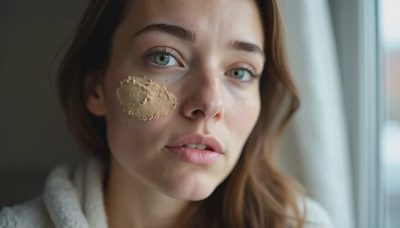
The base had pilled. Small, visible flakes of foundation and setting spray residue had formed along the jawline and around the mouth. This is a pilling failure, caused by the setting spray's alcohol content interacting with the powder and the foundation film.
The foundation had separated around the nostrils. The powder layer had broken down, and the foundation was pooling in the creases.
The T-zone was visibly oily. The mattifying effect had reversed. The skin was producing more oil than it had before the setting spray was applied.
The cheeks were tight and slightly red. The high alcohol content had stripped the surface of the skin, and the dry air conditioning had pulled moisture from the compromised barrier.
The overall face looked tired and uneven. The combination of pilling, separation, rebound oil, and redness made the face look worse than it would have with no setting spray at all.
Failure time: 3 hours 30 minutes after application. The label claimed 16 hours.
The Failure Analysis
Primary failure mode: Alcohol-induced rebound oil production.
The setting spray listed alcohol denat. as its second ingredient. Denatured alcohol evaporates quickly, which is what creates the "mattifying" effect. But it also strips the skin's surface lipids and disrupts the barrier. The skin responds by producing more oil to compensate. In a humid climate, where sweat and sebum are already accumulating on the surface, the rebound oil production happens faster and more visibly than it would in a dry climate.
Secondary failure mode: Pilling.
Pilling occurs when a setting spray's film interacts poorly with the layers underneath. In this case, the alcohol in the spray began to dissolve the powder layer and the surface of the foundation film. As the spray dried, it pulled the partially dissolved layers into small flakes. Pilling is more common with alcohol-based sprays applied over powder, and it is more visible in bright light.
Tertiary failure mode: Barrier disruption and redness.
The high alcohol content stripped the skin's surface lipids. The subsequent exposure to dry air conditioning pulled moisture from the already-compromised barrier. The result was tightness, redness, and a reactive flush around the nose and cheeks.
Contributing factor: The indoor-outdoor transition.
The failure accelerated when the member moved from 84% outdoor humidity into 34% indoor air conditioning. The sudden drop in ambient moisture pulled water from the skin surface and from the setting spray film, causing the already-destabilized layers to separate and pill.
Root cause: Product-climate mismatch.
The setting spray was formulated for temperate, moderate-humidity conditions. It was never tested in a dew point above 65°F. The member packed it based on performance at home, not on performance in the destination climate. The label did not mention dew point, and the member did not check the dew point before packing.
What Would Have Changed the Outcome
1. A different setting spray category. An alcohol-free, temperature-regulating setting spray would not have caused rebound oil production or pilling. The product that worked at home was the wrong product for a high-dew-point destination.
2. Checking the dew point before packing. A dew point of 76°F is outside the design parameters of most mattifying setting sprays. If the member had checked the forecast before packing, they would have known to leave this product at home.
3. Skipping the setting spray entirely. In a high-dew-point environment, powder and blotting papers are more effective than a mattifying spray. The spray added a layer that interacted poorly with the powder and the foundation.
4. Blotting instead of spraying. A tissue pressed against the T-zone before leaving the bathroom would have removed surface oil without adding a film. The setting spray was not necessary.
5. Patch-testing in the destination climate. The member had used the product for eight months at home. They did not test it in the destination climate before applying it to the full face on the morning of a meeting. A patch test on the jawline the night before would have revealed the tightness and rebound oil production before it became a full-face failure.
What the Member Would Pack Next Time
An alcohol-free, temperature-regulating setting spray
Blotting papers for midday oil control instead of a mattifying spray
A hydrating facial mist for the air-conditioned indoor environment
The same foundation (it performed well; the failure was caused by the setting spray, not the base)
A note in their travel log: "Do not pack mattifying setting spray for dew points above 70°F. Check dew point before packing."



No notes yet — write the first one.