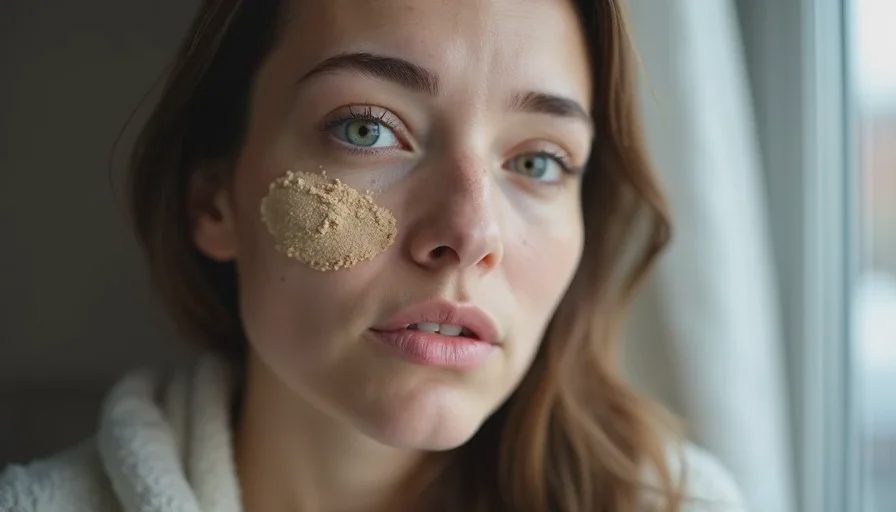
The label says "24-hour wear." The marketing says "transfer-proof." The price tag says "$52." And on your face, in Denver in January, it says something else entirely: cracked, cakey, and clinging to every dry patch you didn't know you had.
This is an unpopular opinion because the beauty industry has spent a decade convincing us that longer wear equals better performance. But in dry climates, that equation breaks down. Long-wear foundation is not a superior category. It is a climate-specific tool—and in dry air, it is often the wrong tool for the job.
What "Long-Wear" Actually Means in a Formula
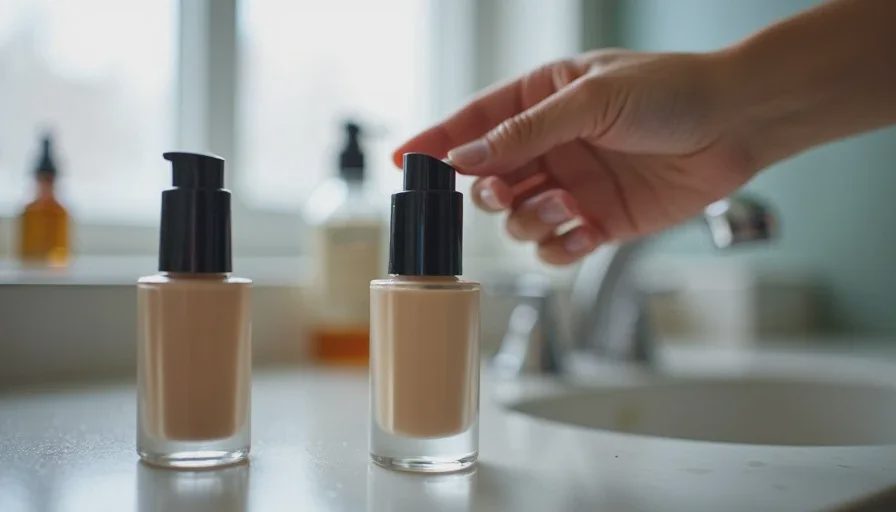
Long-wear foundations achieve their durability through three mechanisms:
1. High concentrations of film-forming polymers. These are the same class of ingredients used in waterproof mascara and long-wear lipstick. They create a flexible, water-resistant film that locks pigment in place. In humid climates, this film is what keeps foundation from sliding off the face.
2. Volatile silicones and drying alcohols. These evaporate quickly after application, leaving behind a dry, matte film. The evaporation is what "sets" the foundation. Without it, the formula remains tacky and mobile.
3. Oil-absorbing powders. Silica, talc, and kaolin clay are added to control shine. In oily skin, these absorb sebum. In dry skin, they absorb whatever moisture is left on the surface.
The problem is that all three of these mechanisms are designed for humid or oily conditions. In dry climates, they work against you.
The Failure Mechanisms: Why Long-Wear Cracks in Dry Air
Mechanism 1: The Moisture Competition
Dry skin lacks sufficient sebum production, which means it struggles to retain moisture and protect against environmental aggressors. When you apply a long-wear foundation, you are introducing a film that is actively trying to absorb moisture from the surface of your skin.
The oil-absorbing powders in the formula do not distinguish between the sebum they were designed to absorb and the water your dry skin is desperately trying to retain. They pull moisture from the stratum corneum, the outermost layer of skin. As the day progresses and your skin becomes more dehydrated, the foundation has nothing left to bind to.
The result: The foundation clings to the dry patches that remain, creating a textured, uneven film that highlights every flake. One reviewer described this exact phenomenon with the Fenty Beauty Pro Filt'r Soft Matte Longwear Foundation: "It does cling to dry patches, so if you have dry skin this might not work for you." Another reviewer said the same product was "a disaster on my dry skin... patchy, cakey, peeling skin."
Mechanism 2: The Shrink-Wrap Effect
Long-wear foundations contain film-forming polymers that create a flexible layer on the skin. In humid climates, these polymers stay soft and move with the skin. In dry air, they shrink-wrap over dry zones.
This is not a metaphor. As moisture evaporates from the skin surface, the polymer film contracts. It tightens around the areas of lowest moisture—the dry patches—and pulls away from areas of higher moisture. The result is visible cracking and separation.
A reviewer of the Charlotte Tilbury Airbrush Flawless Longwear Foundation described it as "the most drying, cakey foundation I have ever used... It accentuates every single line I have, making me aware of some I hadn't really noticed." The reviewer noted that even with exfoliation, serums, moisturizer, and primer, the foundation still cracked and settled into every line.
Mechanism 3: The Oxidation Acceleration
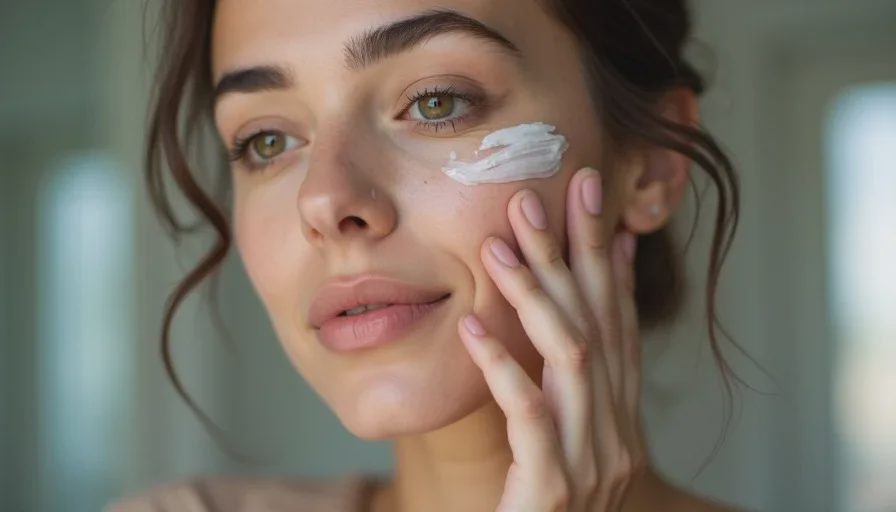
Long-wear formulas often contain high concentrations of pigments like iron oxides. These pigments react with skin lipids and oxygen, causing the foundation to oxidize—shifting from the original shade to a warmer, more orange tone.
In dry climates, the skin produces less oil, which means less lipid is available to react with the pigments. This should slow oxidation, right? Wrong. The problem is that the film is already compromised. The cracking and separation expose more pigment particles to air and to whatever moisture is present. The oxidation happens faster because the protective film is no longer intact.
One reviewer of the Fenty foundation noted that it "oxidized quite a bit" and that the shade "runs warm and not neutral undertone like the name says." This is not a batch inconsistency. It is the formula behaving exactly as it was designed to behave in an environment it was not designed for.
What Real Users Report: The Pattern
Across multiple product reviews, a consistent pattern emerges for long-wear foundations on dry skin in dry climates:
Product | User Report | Source |
|---|---|---|
Charlotte Tilbury Airbrush Flawless Longwear | "Drying, cakey and awful on mature skin... accentuates every single line" | Google Shopping reviews |
Fenty Beauty Pro Filt'r Soft Matte Longwear | "Disaster on my dry skin... patchy, cakey, peeling" | Lyko review |
Fenty Beauty Pro Filt'r Soft Matte Longwear | "Cling to dry patches... if you have dry skin this might not work for you" | Google Shopping reviews |
Fenty Beauty Soft'Lit Luminous Longwear | "Clung BADLY to my dry patches... rested atop my skin" | Google Shopping reviews |
Bobbi Brown Weightless Skin Foundation | "Clung to dry patches around my nose and slid off my chin" | Sephora reviews |
Charlotte Tilbury Airbrush Flawless | "Not very dry skin friendly despite its claims" | Google Shopping reviews |
The pattern is not product-specific. It is category-specific. The same failure mode appears across brands, price points, and formulations. This is not a quality problem. It is a physics problem.
The Counterargument: When Long-Wear Is Actually Better
The unpopular opinion is not that long-wear foundation is always worse. It is that long-wear is worse in dry climates for dry skin. There are situations where long-wear is the correct choice:
1. You have oily skin in a dry climate. Oily skin in Denver or Phoenix still produces sebum. Long-wear formulas control that sebum without requiring powder. The dry air does not dehydrate the skin as quickly because the skin has its own oil supply.
2. You are in a humid climate. This is the environment long-wear was designed for. The film-forming polymers resist sweat and humidity. The oil-absorbing powders manage sebum production. The formula performs as intended.
3. You need a specific wear time for a specific event. A wedding, a job interview, a long flight. For a finite window of time, a long-wear foundation can be the right tool—provided you prep the skin properly and accept the trade-off.
The problem is not the formula category. The problem is using a long-wear formula as a daily default in a dry climate when a shorter-wear, hydrating formula would perform better with less damage to the skin.
The Repair Protocol: What to Do If You Already Own a Long-Wear Foundation
You do not have to throw it away. You can make it work in a dry climate—with adjustments.
1. Change the Prep
The single most important fix. Apply a hyaluronic acid serum to damp skin and wait 60 seconds. Then apply a ceramide-rich moisturizer and wait another 60 seconds. Then apply a facial oil—2–3 drops, pressed into the driest areas. The oil creates an occlusive barrier that slows moisture loss and gives the foundation something to bind to that is not your skin's own water supply.
2. Change the Application
Mix one drop of facial oil or hydrating serum into the foundation on the back of your hand before applying. This thins the formula, adds moisture, and makes it glide over dry patches instead of gripping them. Apply with a damp sponge, not a brush. Press the product into the skin rather than buffing.
3. Change the Setting
Do not powder the full face. Powder is the enemy of dry skin. If you must set the T-zone, use the smallest amount possible and press it in with a finger. Leave the cheeks, jawline, and perimeter unpowdered. Use a hydrating setting spray, not a mattifying one.
4. Change the Expectation
A long-wear foundation in a dry climate will not last 24 hours. It will last 6–8 hours before it begins to crack. Accept that you will need to blot with a hydrating mist rather than powder, and that you may need to touch up with concealer rather than reapplying foundation.
The Alternative: What to Use Instead
If you have dry skin in a dry climate, the better category is hydrating, shorter-wear foundation. These formulas contain:
Humectants (glycerin, hyaluronic acid) that draw moisture into the formula and the skin
Emollients (squalane, jojoba oil) that soften and smooth dry patches
Ceramides that support the skin barrier and prevent transepidermal water loss
The trade-off is wear time. A hydrating foundation may last 6–8 hours instead of 12–16. But it will look better for those 6–8 hours than a long-wear foundation will look for 2–3. And it will not damage the skin barrier in the process.
The reference card is simple:
Humid climate, oily skin → long-wear, matte
Humid climate, dry skin → long-wear, hydrating (if available)
Dry climate, oily skin → long-wear, matte, with hydrating prep
Dry climate, dry skin → hydrating, shorter-wear
FAQ: Long-Wear Foundation in Dry Climates
Is long-wear foundation always bad for dry skin?
No. It is worse in dry climates for dry skin. In humid climates or for oily skin, long-wear formulas perform as intended. The problem is using a long-wear formula as a daily default in a dry climate without adjusting the prep, application, and setting.
Why does my long-wear foundation crack even though I moisturize?
Moisturizer alone is not enough. Long-wear foundations contain oil-absorbing powders and film-forming polymers that pull moisture from the skin throughout the day. You need an occlusive layer—a facial oil or a heavy barrier cream—to slow that moisture loss. You also need to mix a hydrating serum into the foundation itself to counteract its drying properties.
What is the best way to prep dry skin for long-wear foundation?
Three layers: hyaluronic acid serum on damp skin (60 seconds), ceramide moisturizer (60 seconds), facial oil (pressed in, not rubbed). Wait 5 minutes before applying foundation. This gives the skin a reservoir of moisture that the foundation can draw from without dehydrating the skin itself.
Can I mix long-wear foundation with moisturizer to make it less drying?
Yes. Mixing one drop of moisturizer or facial oil into the foundation on the back of your hand thins the formula, adds moisture, and reduces the concentration of drying ingredients. The trade-off is reduced wear time and coverage. But in a dry climate, comfort and appearance matter more than durability.
Why does my long-wear foundation oxidize faster in dry climates?
Oxidation is a reaction between pigments and skin lipids. In dry climates, the film cracks and separates, exposing more pigment particles to air and moisture. The oxidation is not caused by the dry air itself—it is caused by the compromised film. A hydrating foundation that stays intact will oxidize more slowly.
What is the best long-wear foundation for dry skin in a dry climate?
Look for long-wear formulas that contain hyaluronic acid, glycerin, or ceramides in the ingredient list. These are formulated to provide hydration alongside durability. Avoid formulas where the first five ingredients include alcohol denat., isododecane, or cyclopentasiloxane without a corresponding humectant.
Should I switch to a hydrating foundation in winter?
Yes. In dry climates, winter air pulls moisture from the skin and from the foundation itself. A hydrating, shorter-wear foundation will look better and feel better than a long-wear, matte foundation. The trade-off in wear time is worth the improvement in appearance and skin comfort.
How do I make a hydrating foundation last longer in a dry climate?
Use a hydrating primer, apply with a damp sponge, set only the T-zone with a tiny amount of powder, and use a hydrating setting spray. Blot with a tissue rather than powdering for touch-ups. A hydrating foundation that is properly prepped and set will last 6–8 hours in a dry climate without cracking.




No notes yet — write the first one.