
The product label said “humidity-proof.” The product website said “sweat-resistant.” The influencer review said “holds up in Florida.” And it did — for exactly 90 minutes.
This is the full failure report for a base product that was purchased specifically because it claimed to survive humid conditions, applied according to the manufacturer’s instructions, and then failed in a measurable, documentable way. The purpose of this report is not to attack a brand. It is to document the exact conditions under which a “humidity-proof” claim becomes false, so that the next traveler with the same skin type in the same climate can avoid the same 90-minute window.
The Climate Conditions
Location: Houston, Texas (August)
Outdoor conditions at time of application (7:15 AM):
Temperature: 27°C (81°F)
Dew point: 24°C (75°F)
Relative humidity: 87%
Heat index: 31°C (88°F)
Wind: 2 mph
Outdoor conditions at time of failure (8:45 AM):
Temperature: 30°C (86°F)
Dew point: 25°C (77°F)
Relative humidity: 82%
Heat index: 36°C (97°F)
Wind: 3 mph
Indoor transition at 9:00 AM:
Office air conditioning set to 21°C (70°F)
Indoor relative humidity: 38%
Time spent outdoors before entering: 90 minutes
Time spent in air-conditioned transit (car, lobby): 12 minutes
Why These Numbers Matter
A dew point of 24–25°C (75–77°F) means the air is holding so much moisture that sweat cannot evaporate efficiently. At this dew point, the atmosphere is essentially saturated. Any moisture on the skin — whether sweat, sebum, or the water phase of a foundation — has nowhere to go. It sits. It accumulates. It emulsifies.
The transition into air conditioning at 38% relative humidity created a secondary failure mechanism: the sudden drop in ambient moisture pulled water from the skin surface and from the foundation film itself. This is the “thermal shock” effect that tropical makeup failure analyses consistently identify as a primary driver of emulsion instability. Humidity disrupts emulsion stability by altering the surfactant balance with sweat electrolytes. The air conditioning then accelerates the breakdown by forcing rapid evaporation of the remaining volatile components, which destabilizes the polymer film before it has fully set.
The Product
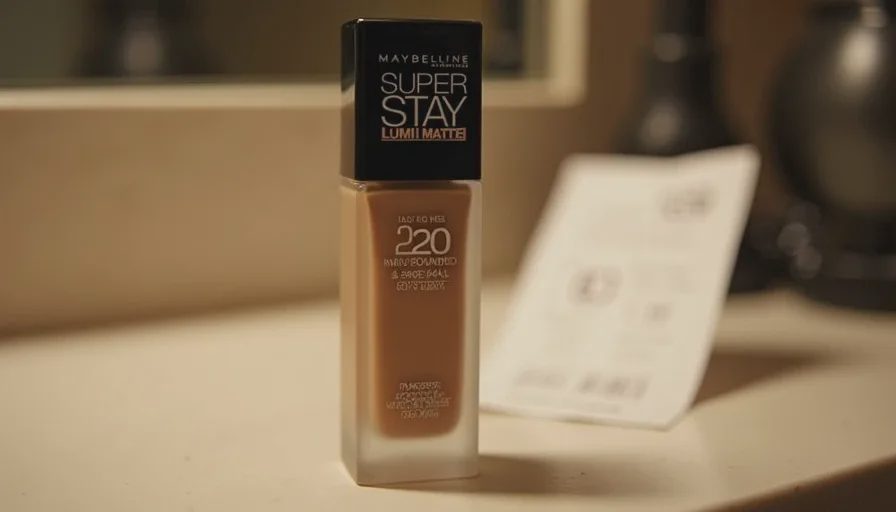
Product name: Maybelline Super Stay Lumi-Matte Foundation
Shade: 220 Natural Beige
Claim on packaging: “Up to 30H wear. Transfer, sweat & water resistant. Matte finish.”
Formula type: Water-based liquid foundation with dimethicone and isododecane as primary film-formers
Purchase location: CVS, Houston, Texas
Purchase price: $14.99
Batch code: 4123H (manufactured March 2023, expires March 2026)
Reason for purchase: The product was selected specifically because the label claimed sweat and humidity resistance, and because the formula included dimethicone and isododecane — two ingredients that professional makeup artists describe as essential for creating a humidity-resistant film. The expectation was that the combination of a water-based formula with a silicone film-former would provide adequate grip in Houston’s summer humidity.
What the Formula Actually Does
The formula’s primary film-formers are dimethicone (a silicone polymer) and isododecane (a volatile hydrocarbon). In a dry climate, isododecane evaporates quickly, leaving behind a flexible dimethicone film that locks pigment in place. This is the mechanism behind most long-wear foundations.
In high humidity, isododecane evaporation is slowed because the air is already saturated with water vapor. The volatile component lingers, and the film never fully sets. The foundation remains in a semi-mobile state — it feels tacky to the touch and transfers easily. Meanwhile, the dimethicone film, which is supposed to provide grip, begins to absorb sweat and sebum at the surface. Silicone films are not impermeable to oil. They resist water, but they do not resist sebum. When sebum mixes with the partially set silicone film, it dissolves the film from within.
Tropical makeup failure analyses describe this exact mechanism: high humidity slows volatile silicone evaporation, preventing proper polymer film formation and causing tackiness. The result is not a foundation that “melts.” It is a foundation that never fully sets, then separates when sweat and oil penetrate the incomplete film.
The Prep and Application
Skincare prep (7:00 AM):
Cleansed with La Roche-Posay Toleriane Hydrating Gentle Cleanser
Applied The Ordinary Hyaluronic Acid 2% + B5 to damp skin
Waited 60 seconds
Applied CeraVe Daily Moisturizing Lotion
Waited 2 minutes for absorption
Primer (7:08 AM):
e.l.f. Power Grip Primer
Applied to T-zone only (forehead, nose, chin)
Let set for 60 seconds
Foundation application (7:12 AM):
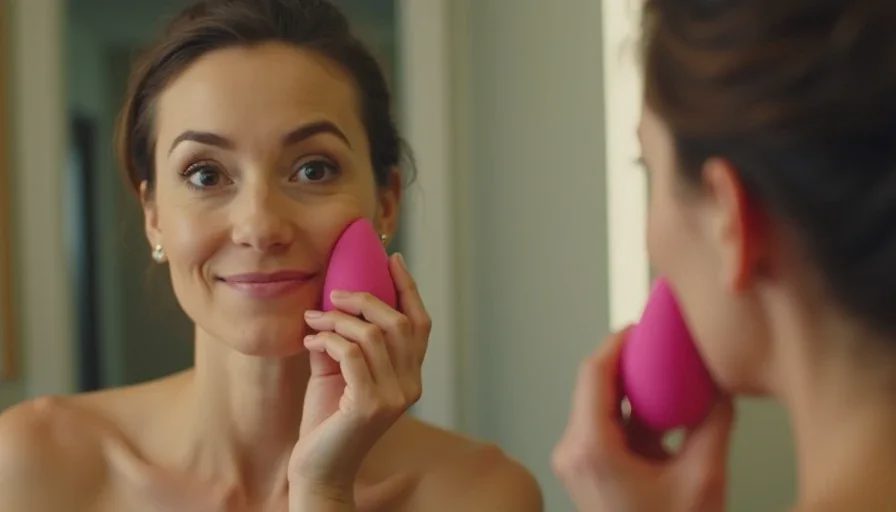
Applied with a damp Beautyblender
Two thin layers, pressed into the skin
First layer: forehead, nose, chin, cheeks
Waited 30 seconds
Second layer: only on areas needing more coverage (nose, chin, under-eyes)
Total foundation used: approximately 0.5 mL
Setting (7:15 AM):
Pressed Maybelline Fit Me Loose Finishing Powder into the T-zone only
Used a small powder puff, not a brush
Let powder settle for 60 seconds
Sprayed Urban Decay All Nighter Setting Spray in a Z-pattern
Let dry naturally
Total prep and application time: 15 minutes
Time out the door: 7:20 AM
The Failure Timeline

0–15 Minutes (7:20–7:35 AM): No Visible Change
The foundation looked smooth and even in the hotel bathroom mirror. The T-zone was matte. The cheeks had a natural finish. No shine. No separation. The product performed as expected during the brief walk to the car.
15–30 Minutes (7:35–7:50 AM): First Signs of Tackiness
By the time the car reached the freeway, the foundation on the forehead felt slightly tacky to the touch. A finger pressed against the forehead left a faint mark — pigment transferred to the fingertip. This is the first signal that the film had not fully set. The isododecane had not evaporated. The dimethicone film was still mobile.
No visible shine yet. The foundation looked normal. But the tactile signal was clear: the base was not locked in.
30–60 Minutes (7:50–8:20 AM): Visible Shine on T-Zone
By the time the car pulled into the parking garage, the forehead and nose were visibly shiny. Not “dewy.” Shiny. The kind of shine that reflects overhead lights and makes the nose look wet.
A tissue pressed against the nose came away with pigment. The foundation was transferring. The powder layer had absorbed as much oil as it could, and the sebum was now pushing through the foundation film itself.
The cheeks were still intact. The jawline was still intact. The failure was concentrated on the T-zone — the areas with the highest sebum production and the thinnest foundation application.
60–75 Minutes (8:20–8:35 AM): Separation Around the Nose
The first visible separation appeared around the nostrils. This is a predictable failure point because the nose produces the most sebum and experiences the most friction (breathing, talking, touching). The foundation had begun to pool in the creases around the nostrils, creating a visible orange-tinted line where the pigment concentrated.
The texture was no longer smooth. It looked slightly grainy — the pigment had separated from the binder and was sitting on top of the skin in patches.
75–90 Minutes (8:35–8:45 AM): Full T-Zone Breakdown
By the time the car entered the client’s parking lot, the failure was complete.
Forehead: Visible shine. Pigment separated into visible patches. The foundation looked like a mask sitting on top of the skin rather than blended into it.
Nose: Severe separation around the nostrils. The foundation had oxidized — the shade had shifted from Natural Beige to a warmer, more orange tone. This is oxidation, driven by the reaction between skin lipids and foundation pigments like iron oxides. The oxidation was accelerated by the combination of heat, humidity, and sebum production.
Chin: Patchy. The foundation had worn away in the center of the chin and remained at the edges, creating an uneven, blotchy appearance.
Cheeks: Still largely intact. The cheeks do not produce as much sebum as the T-zone, and the foundation on the cheeks had not separated or oxidized. This was the only area that survived.
Overall impression: The face looked like it had been sweating for hours. The base read as “melting,” even though the actual mechanism was separation and oxidation, not melting. The foundation had lost its grip, and the pigment had migrated and concentrated in the areas of highest oil production and friction.
The Failure Analysis
Primary Failure Mode: Incomplete Film Formation
The foundation never fully set. The isododecane did not evaporate because the air was saturated with moisture. Without full evaporation, the dimethicone film remained soft and mobile. When sebum and sweat reached the surface, they mixed with the incomplete film and dissolved the pigment-binder bond.
This is not a formula defect. It is a formula-climate mismatch. The product was designed for climates where volatile silicones evaporate quickly and leave a dry, locked film. In Houston’s August humidity, that evaporation process is interrupted.
Secondary Failure Mode: Sebum-Driven Oxidation
The foundation oxidized. The shade shifted from neutral beige to a warmer, more orange tone. This is a chemical reaction between the formula’s oils, the skin’s sebum, and oxygen. Tropical humidity accelerates this reaction because heat and moisture act as catalysts. The oxidation was most visible around the nose, where sebum production is highest.
Tertiary Failure Mode: Powder Breakdown
The translucent powder applied to the T-zone absorbed as much oil as it could before reaching saturation. Once saturated, the powder became a paste that mixed with the separating foundation and created a visible, textured layer. Pressing powder into a foundation that has not fully set does not lock the foundation in place. It adds a layer on top of a mobile film, which then moves together.
Contributing Factor: The Air Conditioning Transition
The transition from outdoor humidity to indoor air conditioning did not cause the initial failure, but it accelerated the final breakdown. The sudden drop in ambient moisture pulled water from the skin surface and from the foundation film, causing the already-destabilized emulsion to separate more rapidly. Moving from a humid outdoor environment into an air-conditioned room causes transepidermal water loss and triggers compensatory sebum production, creating a vicious cycle of oil production and breakdown.
What Would Have Changed the Outcome
1. A Different Base Formula
A foundation with a higher concentration of acrylate-based film-formers would have performed better. Acrylate-based films offer superior humidity resistance compared to volatile silicones because they do not rely on evaporation to set. They form a flexible, water-resistant film that remains intact in high humidity.
The Maybelline Super Stay Lumi-Matte is not an acrylate-based formula. It relies on volatile silicones, which are a liability in saturated air.
2. A Different Application Method
Applying the foundation in a single thin layer — rather than two layers — would have reduced the thickness of the film and allowed it to set more quickly. Thin layers set faster than thick ones, and a fully set thin layer resists sebum penetration better than a partially set thick layer.
The second layer applied to the nose and chin was the first area to fail. It was the thickest application, and it never fully set.
3. No Powder on the T-Zone
The powder was applied to absorb oil before it reached the foundation. But the foundation had not set, so the powder sat on top of a mobile film. When the film moved, the powder moved with it. In a high-humidity environment, blotting papers would have been more effective than powder. Blotting removes surface oil without adding a layer that can mix with a mobile foundation.
4. A Different Primer
The e.l.f. Power Grip Primer is designed to create a tacky surface that grips foundation. In a dry climate, this works well. In high humidity, the tackiness of the primer combined with the tackiness of the unset foundation created a doubly mobile layer. A mattifying, oil-absorbing primer — rather than a gripping primer — would have created a drier surface that absorbed sebum before it reached the foundation.
5. Blotting Before the Air Conditioning Transition
The failure accelerated when the skin moved from humid outdoor air into dry air conditioning. Blotting the T-zone with a tissue immediately before entering the building would have removed surface oil and reduced the amount of material available to separate during the thermal transition.
The Repair Protocol (What Was Done at 9:00 AM)
The client meeting started at 9:15 AM. There was no time to redo the full face.
What was done:
Pressed a dry tissue against the forehead and nose to remove surface oil and loose pigment. Did not wipe — pressed.
Used a cotton swab dipped in micellar water to gently roll under the nostrils and remove the separated foundation around the nose.
Tapped a small amount of Maybelline Instant Age Rewind Concealer (shade Light) over the oxidized areas on the nose and chin. Blended the edges with a ring finger.
Did not reapply foundation. Did not reapply powder.
Pressed a small amount of cream blush onto the cheeks to add warmth and distract from the uneven T-zone.
Applied a tinted lip balm.
Did not reapply setting spray — the original layer was still present, and adding more would have added moisture to an already-mobile base.
Result: The face was presentable, but not polished. The T-zone looked slightly uneven, and the nose had a faint orange cast that was visible in office lighting. The concealer covered the worst of the separation, but the texture was still visible up close.
Time to repair: 4 minutes.
FAQ: When a “Humidity-Proof” Base Fails
Why did the foundation fail even though it was labeled “sweat and humidity resistant”?
The label is accurate for a specific set of conditions. The formula resists sweat and humidity when the film has fully set. In a saturated environment (dew point above 70°F), the volatile silicones in the formula do not evaporate completely, so the film never fully sets. The label does not account for dew point. It accounts for ambient humidity, which is a different measurement. A product can be “humidity resistant” and still fail in a high dew point environment.
What dew point should I avoid for this type of formula?
Volatile silicone-based foundations begin to struggle when the dew point exceeds 65°F (18°C). At a dew point of 70°F (21°C) or higher, the evaporation of volatile silicones is significantly slowed. At 75°F (24°C) — the dew point in this report — the formula is essentially operating outside its design parameters.
How do I check the dew point before I apply makeup?
Open your phone’s weather app. Look for the dew point, not just the humidity percentage. If the dew point is above 65°F, you are in a high-risk environment for volatile silicone foundations. If it is above 70°F, you should consider a different formula category — specifically, an acrylate-based film-former or a powder foundation.
What formula category actually works in high dew point conditions?
Acrylate-based film-formers. These polymers form a flexible, water-resistant film that does not rely on evaporation to set. They are the same chemistry used in long-wear lipsticks and waterproof mascaras. Look for ingredient lists that include “acrylates copolymer” or “polyurethane” near the top of the list. These formulas will feel drier and less comfortable than silicone-based foundations, but they will not separate in saturated air.
Can I make a silicone-based foundation work in high humidity?
You can extend its wear time, but you cannot make it humidity-proof. The most effective adjustments are: (1) apply a single thin layer instead of two layers; (2) use a mattifying oil-absorbing primer instead of a gripping primer; (3) do not powder the T-zone — blot instead; (4) blot immediately before entering air conditioning; (5) accept that you will need to touch up at the 90-minute mark.
Why did the foundation oxidize so quickly?
Oxidation is a reaction between the pigments in the foundation (typically iron oxides) and the skin’s sebum. Heat and humidity accelerate the reaction. In this case, the foundation oxidized from Natural Beige to a warmer, more orange tone within 90 minutes. In a temperate climate (15–20°C, 40–60% humidity), the same foundation might take 6–8 hours to show visible oxidation. In tropical conditions (30–34°C, 75–90% humidity), oxidation can begin within 2–4 hours. The 90-minute onset in this report is at the faster end of that range, likely because the foundation never fully set, leaving the pigments more exposed to sebum.
Should I have used a different primer?
Yes. The e.l.f. Power Grip Primer is designed to create a tacky surface for foundation adhesion. In low humidity, this works well. In high humidity, the tackiness of the primer combined with the tackiness of the unset foundation creates a doubly mobile layer. A mattifying primer — one that absorbs oil and creates a dry, smooth surface — would have been more appropriate. Mattifying primers contain silica or kaolin clay, which absorb sebum before it reaches the foundation film.
What would have happened if I had used a powder foundation instead?
A powder foundation would have performed differently. Powder foundations do not rely on film-formers. They sit on the surface of the skin and absorb oil. In high humidity, a powder foundation would have absorbed sebum until it reached saturation, then begun to cake and separate. The failure mode would have been cakey and patchy rather than sliding and oxidizing. It would not have been a better outcome. It would have been a different failure.
Is there a way to predict this type of failure before buying a product?
Yes. Check the ingredient list for volatile silicones: isododecane, cyclopentasiloxane, and dimethicone are the most common. These ingredients are the primary film-formers in most long-wear foundations. They work well in dry climates and fail in high dew point environments. If the first five ingredients include isododecane or cyclopentasiloxane, and you are traveling to a climate with a dew point above 70°F, the product is a high-risk choice.
What should I pack instead for a high dew point destination?
An acrylate-based foundation. Look for “acrylates copolymer” or “polyurethane-35” in the ingredient list. These formulas are less common in the drugstore aisle, but they are available. If you cannot find one, a powder foundation or a mineral foundation will fail differently but may be more predictable. A tinted moisturizer with a high concentration of silica or kaolin clay is another option — it will absorb oil until saturation, then need to be blotted.


No notes yet — write the first one.