
You step out of your hotel in Seattle at 7:45 AM. The air is not raining, exactly. It is damp—a fine, suspended mist that settles on your face before you reach the corner. By the time you slide into the back of a taxi, your mascara has already begun to migrate. By your 10 AM meeting, the eyeliner you applied with such precision has smudged into a soft, gray shadow under your eyes. By lunch, your eyeshadow has creased into a single, muddy band.
You are not doing anything wrong. You are fighting a climate that is uniquely hostile to eye makeup. Pacific Northwest damp weather—the cool, persistent humidity of Seattle, Portland, and Vancouver—does not dissolve makeup the way Florida heat does. It condenses on it. It softens it. It moves it. And most eye products are not built to resist it.
This is not a “best waterproof mascara” list. This is a survival guide for eye makeup in a climate that never quite rains and never quite dries.
Why Eye Makeup Fails in Pacific Northwest Damp

The Pacific Northwest is not the tropics. Temperatures are mild, often between 40°F and 65°F. Sweat is rarely the primary problem. The problem is ambient moisture—relative humidity that sits between 70% and 90% for days or weeks at a time, combined with cool air that keeps the moisture suspended rather than evaporating it.
This creates three specific failure modes for eye makeup:
1. Condensation on the lash line. The skin around the eyes is thin and warm. When warm skin meets cool, damp air, microscopic condensation forms on the surface. This moisture loosens the waxes and pigments in mascara and eyeliner, causing them to bleed into fine lines and under the eyes. A non-waterproof mascara does not stand a chance.
2. Creasing in the eyelid fold. The eyelid is in constant motion—blinking, squinting, expressing. In a humid environment, cream and powder eyeshadows never fully “set.” They remain slightly pliable, and every blink presses the product into the crease. This is why eyeshadow disappears even when it has not been rubbed off.
3. Transfer from hoods, hats, and glasses. Pacific Northwest residents wear hoods, beanies, and glasses more than people in most other climates. Each of these creates friction against the eye area. A hood that brushes against the eyelid can wipe away eyeshadow. Glasses that slide down the nose can smudge the under-eye area. A beanie that pulls over the forehead can transfer product from the brow bone to the hat, and from the hat back to the face.
The practical consequence: eye makeup that works in Denver or Miami will fail in Seattle unless it is specifically chosen and applied for damp, cool, persistent humidity.
What Actually Works: The Product Categories
Mascara: Tubing Technology Is Non-Negotiable
Tubing mascara is the single most reliable eye product for Pacific Northwest damp. Here is why.
Traditional waterproof mascara relies on waxes and silicones that form a water-resistant film. That film can resist rain and tears, but it is brittle. In cool, damp air, the film stays slightly soft and can smudge with friction—from a hood, from glasses, from rubbing tired eyes. It also flakes when it dries out, which happens in indoor heating.
Tubing mascara works differently. It wraps each lash in a flexible polymer tube. The tube does not dissolve in water or humidity. It does not soften with moisture. It does not flake. It stays intact until you remove it with warm water and gentle pressure. In a climate where rain is a constant possibility and humidity never drops, this is the only mascara category that genuinely survives.
What to look for: Any mascara labeled “tubing” or “tube technology.” The most reliable drugstore options are widely available and cost under $12. They remove with warm water and a gentle sliding motion—no oil-based remover, no scrubbing, no lash damage. For a business trip, this matters. You do not want to be standing in a hotel bathroom at 11 PM trying to dissolve waterproof wax without losing half your lashes.
What to avoid: Any mascara labeled “washable,” “easy removal,” or “gentle formula.” These are formulated to dissolve in warm water and gentle pressure. That same formulation means they will dissolve in the damp Pacific Northwest air over the course of a day. They will smudge. They will transfer. They will disappear.
Eyeliner: Gel or Liquid, Not Kohl
Kohl and cream eyeliners are the worst choice for damp weather. They are formulated with waxes and oils that remain soft and movable. In humidity, they never fully set. They migrate into the fine lines under the eyes and create the dreaded “raccoon” effect within hours.
What works instead: A waterproof gel eyeliner in a pot, applied with a small brush, or a liquid eyeliner pen with a flexible felt tip. Both are formulated to set quickly and resist moisture. Gel liners are slightly more forgiving for beginners. Liquid liners give a sharper line but require a steadier hand.
The application rule: Apply in thin layers, not one thick stroke. A thick layer of gel liner takes longer to set and is more likely to transfer. Two thin layers, with 30 seconds of drying time between them, create a more durable film. Do not tightline with a soft kohl pencil—it will migrate into the eyes and smudge. If you must line the waterline, use a waterproof gel pencil specifically designed for that purpose.
What to avoid: Cream eyeliners in a stick. Kohl pencils. Any eyeliner described as “smudgeable” or “blendable.” Those are designed for a smoky eye in a dry climate, not for a damp one.
Eyeshadow: Cream-to-Powder, Not Cream or Powder Alone

Pure cream eyeshadows are a gamble in the Pacific Northwest. They remain pliable in humidity and crease within an hour. Pure powder eyeshadows can fade and disappear as the moisture in the air breaks down the binder that holds the pigment to the skin.
What works: A cream-to-powder formula or a long-wear cream shadow that is explicitly designed to set down. These products begin as a cream that blends easily, then dry to a flexible, powder-like finish that resists creasing and fading. They are the only eyeshadow category that genuinely survives damp, cool air.
The application rule: Apply a thin layer and blend quickly. Cream-to-powder formulas set fast. Once they set, they do not move. If you need more intensity, add a second thin layer after the first has fully dried. Do not apply a thick layer—it will not set properly and will crease.
The primer question: An eyeshadow primer is helpful but not always necessary if you are using a cream-to-powder formula. If you are using a traditional powder shadow, a primer is mandatory. Choose a primer that is tacky, not slippery. A slippery primer allows the shadow to slide. A tacky primer grips the pigment and holds it in place. Apply a thin layer and let it dry for 30 seconds before applying shadow.
What to avoid: Cream shadows that stay creamy. Loose powder shadows without a primer. Shimmer-heavy shadows—the shimmer particles are often coated in oils that can migrate in humidity.
Setting Spray: Waterproof, Not Dewy
A setting spray can help lock eye makeup in place, but the wrong one will make the problem worse. A hydrating or dewy setting spray adds moisture to the skin surface. In a damp climate, that moisture has nowhere to go. It sits on the skin and accelerates the breakdown of eye makeup.
What works: A waterproof or long-wear setting spray that is explicitly formulated for humid conditions. These sprays create a flexible, moisture-resistant film over the makeup that helps it resist condensation and transfer. They are not the same as mattifying sprays, which can dry out the skin and cause flaking. They are not the same as hydrating sprays, which add moisture.
How to apply: Spray after all eye makeup is applied. Hold the bottle 8–10 inches from your face and mist in a Z-pattern. Do not spray so much that the skin looks wet. One light pass is enough. If you are wearing glasses, spray before you put them on—the spray can leave a residue on the lenses.
What to avoid: Hydrating setting sprays. Dewy setting sprays. Any spray that describes itself as “refreshing” or “moisturizing.” Those are for dry climates.
The Application Technique That Makes the Difference
Even with the right products, the wrong technique can cause eye makeup to disappear. Here is what to do differently in Pacific Northwest damp.
1. Start with a clean, dry eye area.
Any oil or moisture on the eyelids will prevent eye makeup from setting properly. After washing your face, pat the eye area dry with a clean tissue. Do not apply eye cream immediately before makeup—give it at least five minutes to absorb. If your eyelids feel oily, swipe a small amount of micellar water on a cotton pad across the lids and let them dry completely.
2. Apply eye makeup before face makeup.
This is counterintuitive for some people, but it matters in damp weather. If you apply foundation and powder first, the powder can settle into the eye area and create a textured surface that prevents eye makeup from adhering. Apply eye makeup first, then clean up any fallout with a cotton swab, then apply foundation and concealer around the eyes. This also prevents setting spray from breaking down your base when you spray it over the eyes.
3. Use thin layers and let each layer set.
This is the single most important technique rule. In damp weather, thick layers of any product do not set properly. They remain soft and movable. Thin layers set faster and create a more durable film. Apply mascara in one thin coat, let it dry for 30 seconds, then apply a second thin coat if needed. Apply eyeliner in two thin strokes, not one thick one. Apply eyeshadow in a thin layer and wait for it to set before adding more.
4. Do not rub your eyes.
This sounds obvious, but it is the most common cause of eye makeup disappearance in damp weather. The air itself does not remove makeup. Friction does. When your eyes feel tired or itchy from the damp air, you rub them. That friction transfers product to your fingers and removes it from your face. If your eyes feel irritated, use a lubricating eye drop instead of rubbing. If you wear glasses, clean them regularly—smudged lenses make you want to rub your eyes more.
5. Blot, do not wipe, if you need to touch up.
If you notice smudging under the eyes, do not wipe it with your finger. That will spread the pigment and remove more product. Instead, press a dry tissue or a cotton swab against the smudged area. Pressing lifts the excess product without disturbing the rest of the makeup. If the smudge is severe, dip a cotton swab in micellar water and gently roll it under the eye to remove the smudge, then tap a tiny amount of concealer over the area.
The Pacific Northwest Eye Kit: What to Pack
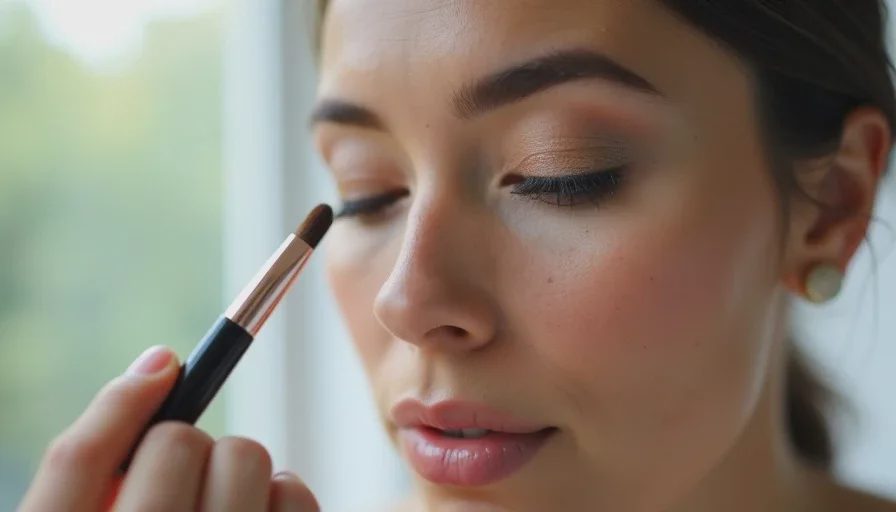
Category | Product Type | Why It Works |
|---|---|---|
Mascara | Tubing mascara | Resists humidity, rain, and tears. Removes with warm water. |
Eyeliner | Waterproof gel or liquid pen | Sets quickly, resists moisture, does not migrate. |
Eyeshadow | Cream-to-powder formula | Sets down, resists creasing, does not fade. |
Primer | Tacky eyeshadow primer (if using powder shadow) | Grips pigment, prevents fading. |
Setting spray | Waterproof or long-wear spray | Creates moisture-resistant film over eye makeup. |
Tool | Cotton swabs and micellar water | For smudge repair without removing all makeup. |
FAQ: Eye Makeup in Pacific Northwest Damp Weather
What if my mascara smudges even though it is waterproof?
Waterproof mascara can still smudge in damp weather because the wax film stays slightly soft and moves with friction. Switch to a tubing mascara instead. Tubing formulas do not soften in humidity. They form a flexible tube around each lash that stays intact until you remove it with warm water. If you cannot find tubing mascara, apply a thin layer of translucent powder to the eyelids before mascara to absorb any oil that might contribute to smudging.
What if my eyeliner disappears by lunch?
This usually means the liner is not setting properly. Apply in two thin layers instead of one thick one. Let the first layer dry for 30 seconds before applying the second. If you are using a gel liner, make sure your eyelid is completely dry and oil-free before applying. If you are using a pencil, switch to a gel or liquid formula. Pencils are formulated with waxes that remain soft in humidity.
What if my eyeshadow creases even with a primer?
A slippery primer can cause creasing. Choose a tacky primer, not a silicone-heavy one. Apply a thin layer and let it dry for 30 seconds before applying shadow. If you are using a cream shadow, switch to a cream-to-powder formula. Cream shadows that stay creamy will always crease in damp weather. If you are using a powder shadow, apply it with a damp brush—the moisture helps the pigment bind to the primer and set more firmly.
What if I wear glasses and my eye makeup transfers to the lenses?
Glasses create friction against the eye area. Apply eye makeup before your base, and set it with a waterproof setting spray. If your lashes touch the lenses, curl them gently before applying mascara. If your under-eye area smudges onto the lower rim of the glasses, use a cotton swab dipped in micellar water to clean the lenses, and apply a slightly heavier layer of setting powder under the eyes to absorb oil. Avoid touching your glasses against your face—adjust them by the frame, not by pushing them up on your nose.
What if I have oily eyelids and everything slides off?
Oily lids are a separate problem from humidity, but the two together are brutal. Start with a mattifying eye primer or a thin layer of translucent powder on the lids. Then apply a cream-to-powder shadow. Avoid cream shadows that stay creamy. If you use a pencil liner, set it with a matching powder shadow applied with a small brush. If you use a gel liner, choose a waterproof formula and apply it in thin layers. Blot your eyelids with a tissue before applying anything—removing surface oil helps products adhere.
What if I only have five minutes to get ready?
Focus on mascara and eyeliner, and skip eyeshadow entirely. Tubing mascara plus a waterproof gel liner gives you the most visible definition with the least risk of smudging. Apply the liner first, then mascara. Use a waterproof setting spray if you have it. If you do not have time for setting spray, press a tissue against the under-eye area after applying mascara to remove any transfer before it sets.
What if my eyes water in the damp air?
Watery eyes are common in cool, damp weather, especially if you wear contacts or have allergies. Use lubricating eye drops before applying eye makeup. This reduces the urge to rub your eyes. If your eyes water after applying makeup, do not wipe them. Press a tissue gently against the closed eye to absorb the moisture. If the watering is severe and persistent, switch to a tubing mascara and a waterproof gel liner—they are the most resistant to tears. If you wear contacts, apply eye makeup after inserting your contacts, not before.
Can I use the same eye makeup routine in both damp and dry climates?
No. The products that work in Pacific Northwest damp are different from the products that work in Colorado dry cold or Florida wet heat. In dry climates, you need hydrating formulas and cream products. In damp climates, you need waterproof and cream-to-powder formulas. If you travel between climates, you need to adjust your kit, not just your technique. The one product that works in all three is tubing mascara—it resists humidity, does not flake in dry air, and removes easily with warm water.


No notes yet — write the first one.